Gingivitis and Bleeding Gums: What Daily Care Can Do

About this guide: Published by Flossy, the retailer of Flossy Oral Jet. This guide includes our own products and provides general oral-care information. For advice about your teeth, gums or dental appliances, consult your dentist.
Yes, early-stage gingivitis is usually reversible. Start by fixing your mechanical plaque removal (proper brushing plus daily interdental cleaning) and book a professional clean if you suspect tartar buildup. How quickly gums improve varies; a dentist can assess persistent bleeding or suspected tartar.
TL;DR:
Daily brushing and between-teeth cleaning support gum health, but improvement varies. A dentist can assess bleeding gums and whether professional treatment is needed.
Once tartar forms, professional scaling is necessary to effectively remove hardened deposits that home care alone cannot eliminate.
Signs of improvement may include less bleeding and swelling. Arrange a dental check if gums bleed, symptoms persist, or they worsen.
Maintaining gum health long-term requires personalized professional recare schedule and strict daily routines, especially for high-risk groups such as smokers and diabetics.
Consistency in technique and routine outweighs the choice of specific products or rinses in preventing gingivitis recurrence.
Table of Contents
What is gingivitis and why can you reverse it?
Gingivitis is inflammation confined to the soft tissue around your teeth, caused by a sticky film of bacteria called dental plaque. Nothing structural has broken down yet. Because the bone and the fibres anchoring your teeth are still intact at this stage, consistent plaque control can genuinely restore the tissue to health, according to a clinical evidence summary on gingivitis reversibility. That is the whole reason gingivitis gets treated as a warning shot rather than a life sentence. It has not turned into periodontitis, where bone loss becomes permanent.
A few things tend to tip the scales toward gum trouble:
-
Inconsistent or ineffective brushing and flossing
-
Smoking, which masks bleeding and slows healing
-
Certain medications that reduce saliva flow or cause gum overgrowth
-
Systemic conditions like diabetes, which alter the body’s inflammatory response
-
Hormonal shifts during pregnancy or puberty that make gums more reactive to plaque
How do you reverse gingivitis at home?
This is the part you control every single day, and it is where most of the improvement happens. The goal isn’t a fancier toothbrush for its own sake. It’s removing plaque thoroughly enough, often enough, that your gums finally get a chance to calm down.
-
Brush properly, twice a day. Use a soft-bristled brush angled at 45 degrees against the gumline, and spend the full two minutes covering every surface. An oscillating or rotating electric toothbrush has a genuine edge here. A randomised trial found that pairing intensive oral hygiene instruction with an electric toothbrush was associated with gingivitis resolution in 89% of the intervention group after one month, compared with 7% of controls. This study did not test water flossers or Flossy.
-
Clean between your teeth daily. String floss remains a solid first-line option, but it only works if you actually use it. If threading floss under wires or around bridges feels like a losing battle, interdental brushes or a water flosser may make between-teeth cleaning easier. Ask your dentist which method suits your teeth and any dental work. Officialflossy’s guide to water flossing with braces covers the technique in more detail.
-
Add a short-term rinse if your dentist suggests one. Chlorhexidine or CPC mouthwash can knock back biofilm and inflammation quickly, but chlorhexidine tends to stain teeth with prolonged use, so it is generally kept to short courses rather than a permanent fixture.
-
Address the lifestyle side. Cutting back on sugary snacks reduces the fuel plaque bacteria feed on, and quitting smoking removes one of the biggest barriers to healing, partly because it hides the bleeding that would otherwise tell you something is wrong.
-
Use technique aids to check your own blind spots. Plaque-disclosing tablets stain the areas you missed in bright colour, which is far more honest than trusting how “clean” your mouth feels. A tongue check along the gumline, a two-minute timer, and a fixed habit cue (brushing straight after your morning coffee, for instance) all help lock the routine in.
Pro Tip: Use a plaque-disclosing tablet once, note exactly which spots stain, then spend the next few days deliberately brushing those areas first while they’re still fresh in your mind. It retrains your technique faster than any generic advice ever will.
Some people add herbal rinses containing pomegranate, green tea, or chamomile extract alongside their mechanical routine, and early research points to some anti-inflammatory benefit. Treat these as a supplement to brushing and interdental cleaning, never a replacement for them.
When do you need professional scaling for gingivitis?
Home care handles soft plaque, but once plaque hardens into calculus (also called tartar), no amount of brushing will shift it. That’s where professional mechanical plaque removal, or scaling, comes in. Evidence shows it adds real benefit on top of oral hygiene instruction when home care alone isn’t cutting it, according to a review of professional plaque removal.
Book an appointment if you notice any of the following:
-
Bleeding when brushing or cleaning between teeth, particularly if it persists or worsens
-
Visible tartar, usually a yellowish or brownish crust near the gumline
-
Gums that seem to be pulling away, or pockets that feel deeper than before
-
Pain, swelling, or any sign of pus, which points toward something beyond simple gingivitis
During a scaling appointment, a dentist or hygienist uses hand instruments or an ultrasonic scaler to remove calculus above and below the gumline, then polishes the surfaces to slow future buildup. Recall intervals afterward depend on your personal risk. Someone with clean hygiene and no other risk factors might only need a check every twelve months, while a smoker or someone with diabetes may need reviews every three to six months.
How long does it take to reverse gingivitis?
How quickly gums improve varies. If you notice bleeding, swelling or pain, a dentist can identify the cause and recommend appropriate care.
Track your own progress with a few honest markers:
-
Less bleeding when you brush or floss, ideally none at all
-
Gums shifting from red or purplish back to a healthy pink
-
Swelling going down, with gums feeling firmer against your teeth
-
A plaque-disclosing tablet showing fewer stained patches over time
See a dentist if your gums bleed, symptoms persist or they worsen rather than waiting for a set number of days. Persistent bleeding alongside loose teeth or receding gums can signal periodontitis, which needs different treatment entirely.
How do you stop gingivitis from coming back?
Reversing gingivitis once is one thing. Keeping it away is a different habit entirely, and it’s the part most people skip once their gums stop bleeding.
-
Set a recall schedule that matches your risk. Ask your dentist how often you need professional reviews or cleaning; the right schedule depends on your gum health and individual risks.
-
Keep the daily mechanics non-negotiable. An electric toothbrush plus interdental cleaning, done properly every single day, is what actually holds the gains you’ve made. A long-term study following a combined regimen of electric brushing, stannous fluoride toothpaste and daily interdental cleaning found sustained reductions in bleeding and slower periodontal progression over two years compared with usual care.
-
Make the routine easier to keep, not harder to remember. Stack flossing onto an existing habit, like right after your evening skincare routine. Keep a compact device somewhere visible, whether that’s on the bathroom counter or in your travel bag, so the barrier to doing it stays close to zero.
What does the clinical evidence actually say?
The case for reversing gingivitis through consistent care isn’t guesswork. A clinical evidence summary on gingivitis assessment recommends checking for healing at one to two months, giving tissue enough time to genuinely respond to improved plaque control.
-
The cited trial combined intensive oral hygiene instruction with an electric toothbrush. Its 89% resolution result cannot be attributed to a water flosser or to Flossy.
-
Systematic evidence supports professional scaling as a meaningful add-on when home instruction alone isn’t resolving things.
-
The European Federation of Periodontology’s S3-level clinical guideline backs a personalised approach, one that blends behavioural coaching, professional support, and daily self-care rather than a single fix.
Our oral-care guides discuss cleaning options, but evidence for oral irrigators is limited and results from other devices should not be treated as Flossy-specific outcomes.
Why consistency beats any single product
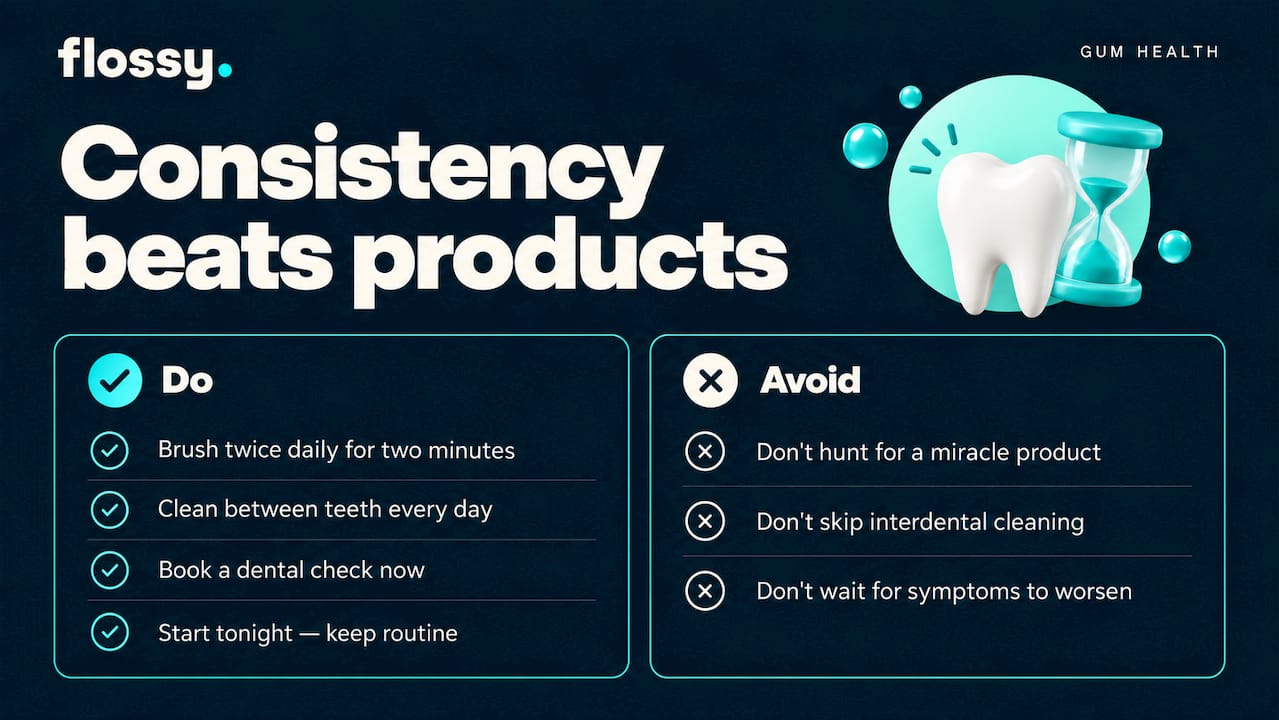
Most people search for the one product or rinse that will fix bleeding gums overnight. The research doesn’t really back that up. The 89% figure came from a specific study of instruction and electric brushing, not a promise for any product. Clinicians repeatedly point to consistency as the real obstacle, not knowledge.
If you’re not sure where you stand, book a dental check now rather than waiting for symptoms to worsen. Then start tonight: brush properly for the full two minutes, and don’t skip the interdental cleaning, whatever tool gets you there.
— Spencer
A simpler way to keep up the interdental habit
If string floss keeps ending up unused in the drawer, you’re not alone, and that’s exactly the gap a cordless water flosser is built to close. The Flossy Oral Jet is designed for people who find traditional floss awkward around braces, implants, or tender gums, using a gentle pulsed water jet instead of a thread you have to maneuver by feel.
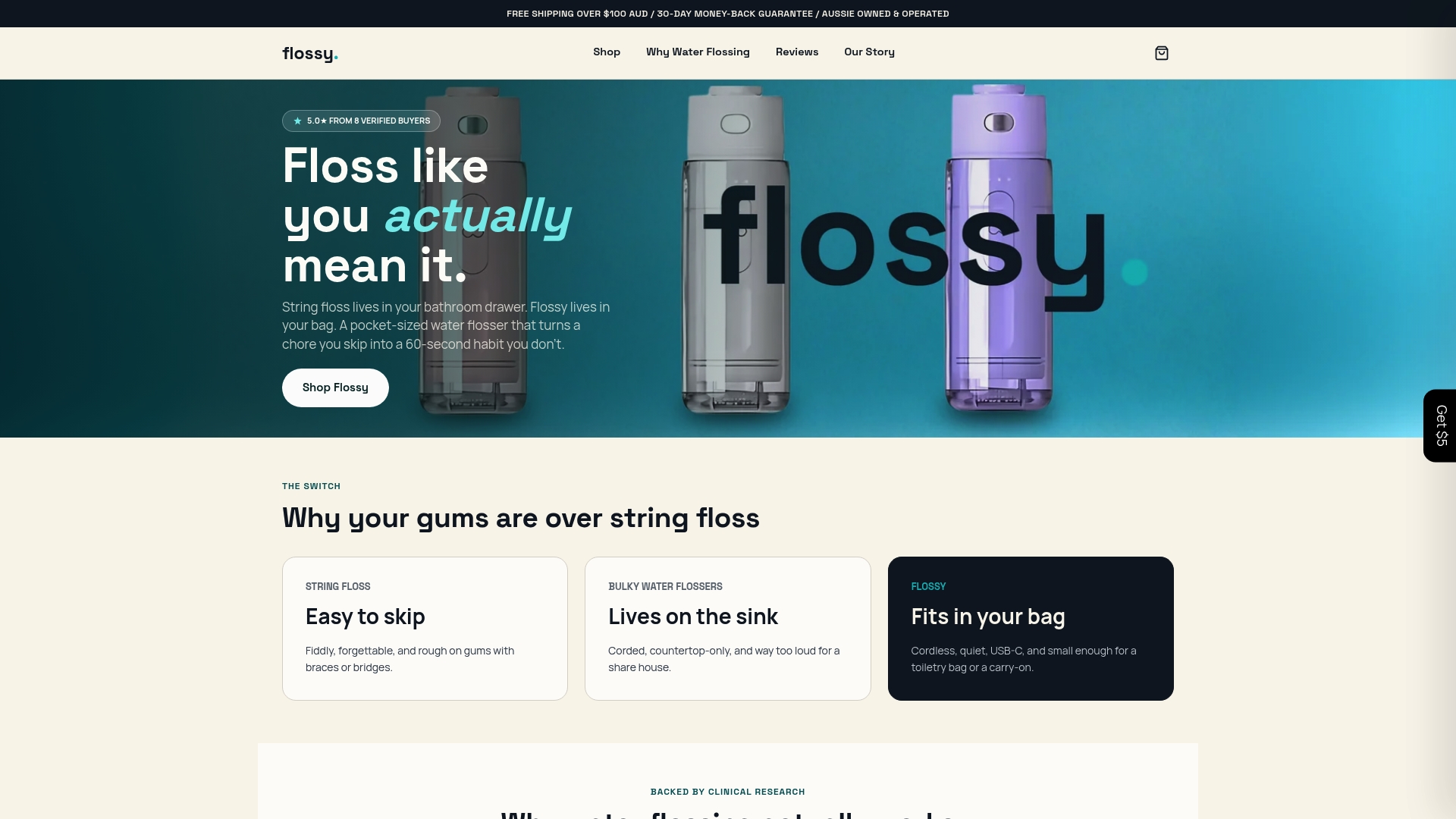
The Flossy Oral Jet is USB-C rechargeable and pocket-sized, so it travels easily if your routine tends to fall apart the moment you leave home. If you’re setting up gum care for the whole household, the Flossy Family Bundle (4 Jets) covers everyone without the daily scramble over one shared device, while the Flossy Couples Bundle (2 Jets) suits two people setting the habit together. Use whichever option alongside proper brushing and regular dental visits, not instead of them, and start tonight if bleeding gums have been on your mind.
This article is general information, not a substitute for advice from a qualified doctor. Consult a qualified healthcare professional about your own circumstances before acting on anything here.
Sources
FAQ
What kills gingivitis naturally?
Nothing “kills” gingivitis in one hit. Thorough mechanical plaque removal, meaning proper brushing and daily interdental cleaning, is what actually resolves the inflammation, sometimes supported by anti-inflammatory rinses like green tea or chamomile as an adjunct.
Is it too late to reverse gingivitis?
Not usually, as long as the disease hasn’t progressed to periodontitis, where bone and attachment loss becomes permanent. If you’re seeing loose teeth, gum recession, or deep pockets alongside the bleeding, see a dentist promptly to check whether it has moved beyond gingivitis.
Can you smell if you have gingivitis?
Yes, persistent bad breath can accompany gingivitis, since the same bacterial plaque driving the inflammation also produces odour. It’s a useful early warning sign alongside bleeding and redness, though it isn’t present in every case.
What is the number one cause of gingivitis?
Dental plaque biofilm sitting on your teeth is the primary cause, aggravated by poor brushing habits, smoking, certain medications, and conditions like diabetes. Removing that plaque consistently is the foundation of every effective treatment approach.
Recommended
Meet the Flossy Oral Jet
Cordless, five nozzles, three pressure modes, and small enough to live in your bag.