1 Meter, 30 Minutes: IPX7 Waterproof Rating for Water Flossers

About this guide: Published by Flossy, the retailer of Flossy Oral Jet. This guide includes our own products and provides general oral-care information. For advice about your teeth, gums or dental appliances, consult your dentist.
An IPX7 rating means a device can survive being dunked in up to 1 metre of water for up to 30 minutes under lab conditions. That’s the whole promise. It says nothing about dust, grit, or standing up to a jet of water, so a device can be IPX7 and still hate a sandy beach or a high-pressure shower head. Always check the manual before you assume more than that.
TL;DR:
- IPX7 devices can withstand being submerged in one meter of water for up to 30 minutes in controlled lab settings, but real-world conditions may vary.
- The standard testing uses fresh water under controlled conditions, and deeper or longer immersion exceeds the IPX7 rating, which is a minimum protection floor.
- IPX7 only tests immersion, not resistance to jets or pressure, so devices without additional ratings shouldn’t be used under a shower or in high-pressure water streams.
- Saltwater or chlorinated pools can degrade seals over time, so rinsing with fresh water and inspecting gaskets regularly helps maintain water resistance.
- For daily scenarios like drops in the sink or splashes, IPX7 is typically sufficient, but it does not guarantee protection during prolonged or high-pressure water exposure.
Table of Contents
- What the IP code actually tests
- IPX7 versus jet ratings and deeper immersion ratings
- When IPX7 is safe to rely on, and when it isn’t
- Keeping your device’s water resistance intact over time
- What IPX7 means for water flossers and small bathroom gadgets
- When IPX7 is enough, and when it isn’t
- A splash-safe water flosser worth considering
- Where to check the standards yourself
- Sources
- FAQ
What the IP code actually tests
The IP code (short for Ingress Protection) is the classification system defined by IEC 60529, and it’s what gives you numbers like IPX7 in the first place. Two digits follow the letters “IP”: the first covers solids like dust and grit, the second covers liquids. When you see an “X” in place of the first digit, as in IPX7, it means the device simply wasn’t tested against solids at all, not that it passed.
For the liquid digit, “7” has a specific meaning under the standard. According to the IP code standard on Wikipedia, IPX7 devices are tested by immersion, and manufacturer explainer pages consistently describe that as water up to 1 metre deep for up to 30 minutes, confirmed by Trusted Reviews.
A few things worth knowing about how that test actually works:
- Tests are run in fresh water under controlled lab conditions, per IEC 60529.
- The immersion window is fixed. Longer submersion or greater depth falls outside what IPX7 covers.
- Some manufacturers publish extra detail beyond the base standard, including specific IPX8 depth and duration figures for their own products.
That last point matters. IPX7 is a floor, not a universal promise, and two IPX7 devices from different brands might tolerate real-world knocks differently even though they share the same rating on the box.
IPX7 versus jet ratings and deeper immersion ratings
IPX7 sits in the middle of a bigger family of liquid ratings, and mixing them up is where most confusion happens. Jet resistance and immersion resistance are tested completely differently, so passing one tells you nothing about the other.
- IPX5 and IPX6 test resistance to water jets sprayed directly at the device, which is a different stress entirely to sitting still underwater.
- IPX7 tests immersion only, which is why a device rated IPX7 can still let water in under a strong shower jet or a tap running at full pressure.
- IPX8 goes further than IPX7, and manufacturers typically define their own deeper depth and longer duration figures for it rather than relying on a single fixed standard value.
- IP68 combines a dust rating (6, the highest solids protection) with an IPX8-level liquid rating, giving you protection on both axes rather than just one.
Garmin’s own water rating definitions page is a good example of how manufacturers handle this: some devices carry combined ratings like IPX5/IPX7, meaning they’ve been tested for both jets and immersion rather than just one. That’s worth checking for, because a plain IPX7 rating with no accompanying jet rating means jets simply weren’t part of the test. And remember, the “X” never equals zero: it means untested, not failed, but you should treat it as unknown protection rather than assume it’s fine.
When IPX7 is safe to rely on, and when it isn’t
IPX7 covers more everyday accidents than people expect, but it has real limits too. Here’s how to think about common situations:
- Accidental drops into water are exactly what IPX7 is built for: dropping your device in a sink, a puddle, or a pool for a moment and fishing it out fits comfortably within the 1 metre, 30 minute window.
- Heavy rain and splashes sit well within IPX7’s coverage, since neither involves sustained pressure or deep submersion.
- Direct shower jets are riskier than people assume, because the pressure from a shower head resembles a jet test (IPX5/IPX6) more than a calm immersion test, and plain IPX7 devices aren’t verified against that.
- Swimming pools and prolonged soaking push past the tested duration and depth, so treat any dunk longer than half an hour, or deeper than a metre, as outside the guarantee.
- Saltwater exposure isn’t part of the standard fresh water test, and salt residue left on seals and ports can degrade them over time even if the immersion itself was survived.
- Wearables with Bluetooth will typically lose connection underwater regardless of rating, since radio signals don’t travel well through water. That’s a signal issue, not a waterproofing failure.
If a device does get dunked, act quickly. Rinse off any saltwater with fresh water as soon as you can, then dry charging ports and seams thoroughly before plugging anything in. Moisture sitting in a connector is one of the more common ways an otherwise fine IPX7 device gets damaged.
Keeping your device’s water resistance intact over time
An IPX7 rating describes the device when new. Seals wear, and how you treat the device day to day decides how long that protection actually lasts.
- Rinse with fresh water after any exposure to salt, chlorine, or soap residue, then dry ports and seams before charging.
- Avoid abrasive grit like sand working into seals, since it can wear down the rubber gaskets that hold the seal.
- Check gaskets periodically for cracking, stiffness, or gaps, and replace them if the manufacturer offers replacement parts.
- Stop using the device if you notice persistent condensation inside a casing, a sticky or corroded charging port, or visible cracks near seams.
- Read the warranty section of the manual specifically for water damage. Many warranties exclude it even when the device carries an IP rating.
Pro Tip: Keep the charging port pointed downward and fully dry for a few minutes after any water exposure, well before you plug it in.
What IPX7 means for water flossers and small bathroom gadgets
Small bathroom electronics like water flossers live in one of the wettest rooms in the house, which makes an IPX7 rating genuinely useful rather than a spec-sheet afterthought. Flossy’s product pages list IPX7 protection for the Flossy Oral Jet, which in practice means the device is built to handle splashes at the sink, a quick rinse under the tap, or an accidental drop into a full basin without drama.
The same caution applies here as anywhere else. IPX7 covers immersion, not jets or dust, so a few habits matter:
- Rinse the device head after each use, but avoid dunking it while it’s plugged into its USB-C cable, since the immersion rating applies to the device, not to a live charging connection.
- Dry the USB-C port fully before charging, since a damp connector is the most common way small electronics develop charging faults.
- Avoid saltwater or chlorinated pool water where possible, and rinse promptly with fresh water if either happens.
That figure describes plaque removal and gum health outcomes, separate from IPX7, which is purely about how the device tolerates water.
When IPX7 is enough, and when it isn’t
If you’re mostly worried about travel knocks, sink splashes, or the occasional drop in the bath, IPX7 is genuinely enough. That’s most people, most of the time. I’d only push toward IPX8, IP68, or a device with a dedicated jet rating if you’re planning regular use under a running shower head or expect frequent exposure to pressurised water, because that’s precisely the scenario IPX7 was never tested against. Whatever the number on the box says, the manufacturer’s own manual is still the final word on what your specific device can handle.
— Spencer
A splash-safe water flosser worth considering
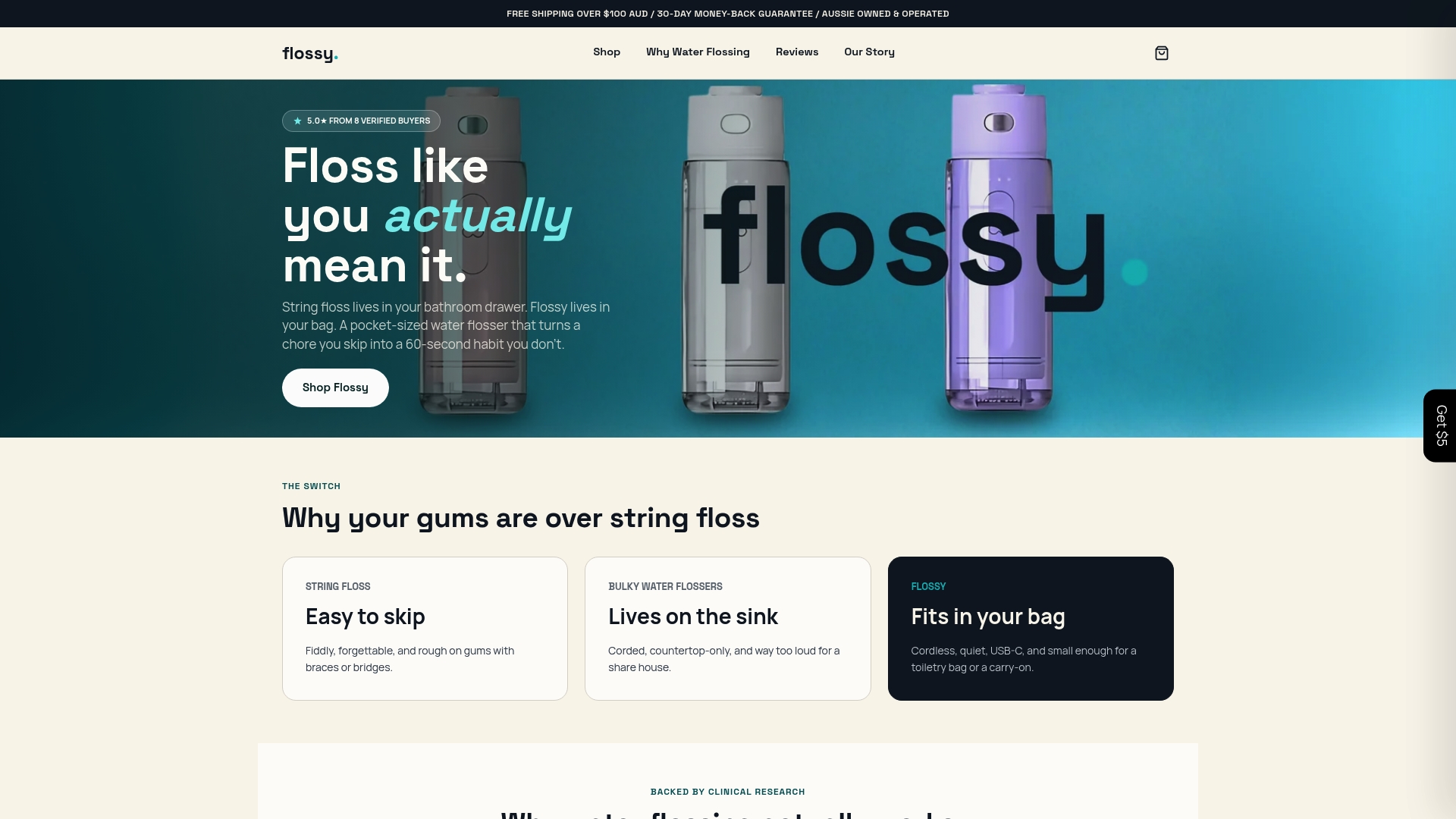
If you’re shopping for a bathroom gadget that can handle the wet, messy reality of daily use, the Flossy Oral Jet is built for exactly that. It’s a cordless, pocket-sized water flosser with IPX7 protection listed on the product page, which means it’s designed to take splashes at the sink and the odd drop without needing to be babied.
- Rinse it clean under the tap between uses without worrying about everyday splash exposure.
- Charge it via USB-C, and dry the port fully first if it’s had any water contact.
- Choose from the single Flossy Oral Jet, or check out the Flossy Couples Bundle or Flossy Family Bundle if you’re outfitting more than one person. Current prices are on the pricing page.
If braces, sensitive gums, or a habit of skipping string floss altogether sound familiar, have a look at the Flossy Oral Jet and see whether it fits your routine.
Where to check the standards yourself
For readers who want to verify any of this directly against the source material:
- The IP code standard explains how solids and liquids are tested and scored separately.
- IEC 60529 is the formal standard document defining every IP test condition.
- Trusted Reviews’ IPX7 explainer breaks the rating down in plain terms.
- Garmin’s water rating definitions page shows how one manufacturer applies the standard in practice.
Sources
- IP code - Wikipedia
- IEC 60529 Consolidated version — IEC webstore
- What is IPX7? The water resistance rating explained — Trusted Reviews
- Water Rating Definitions | Garmin
FAQ
Is IPX7 fully waterproof?
No rating labelled with an “X” is fully waterproof in an absolute sense. IPX7 covers immersion up to 1 metre for up to 30 minutes under lab conditions, but it doesn’t cover dust, jets, or prolonged submersion beyond that window, as explained in the IP code standard.
Can you wear IPX7 in the shower?
It’s riskier than most people assume, because shower jets create pressure closer to a spray test than a calm immersion test. Garmin’s water rating guidance notes that immersion and jet resistance are tested separately, so a device without a jet rating alongside IPX7 hasn’t been verified against a running shower head.
Which is better, IPX7 or IPX8?
IPX8 generally allows for deeper or longer immersion than IPX7, though manufacturers set their own specific depth and duration figures for IPX8 rather than following one fixed value in the standard. Check the manufacturer’s manual for the exact figures on your device rather than assuming IPX8 always means “better” in every scenario.
Is IP68 better than IPX7?
IP68 covers both dust and deeper liquid immersion, while IPX7 only covers immersion and leaves dust resistance untested. If you’re in a dusty or sandy environment often, IP68 offers protection that IPX7 simply doesn’t test for at all.
Recommended
Meet the Flossy Oral Jet
Cordless, five nozzles, three pressure modes, and small enough to live in your bag.